

Achilles Tendon Solutions from Plantar Fasciitis With PRP Therapy

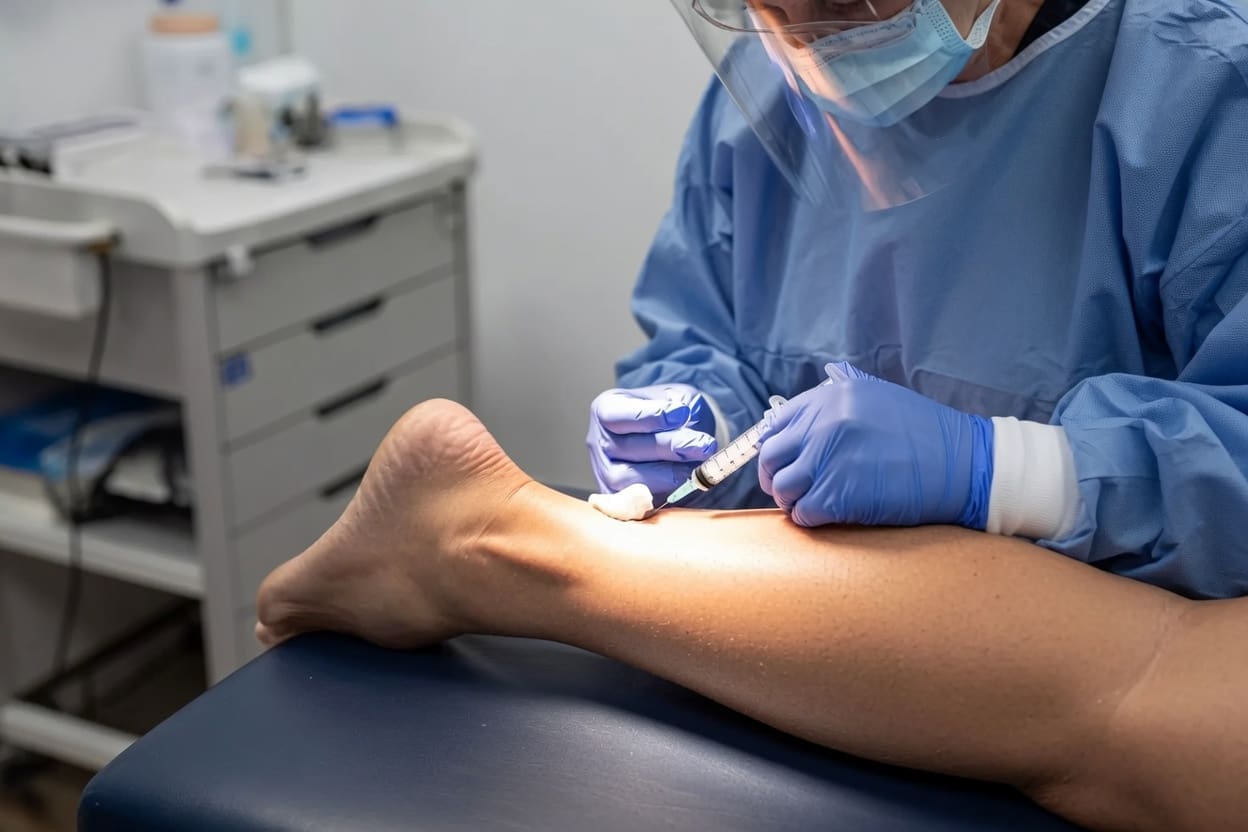
Uncover the potential of PRP therapy in treating plantar fasciitis and Achilles tendon injuries for lasting relief and support.
Table of Contents
Abstract
Plantar fasciitis is a condition that causes debilitating heel pain for millions of individuals, often leading to a frustrating cycle of chronic discomfort and failed treatments. Conventional approaches have historically focused on direct interventions to the plantar fascia itself, such as injections, stretching, and orthotics. However, this localized approach frequently overlooks the root cause, which often lies further up the kinetic chain. In this educational post, I, Dr. Alex Jimenez, will share a paradigm-shifting approach to treating plantar fasciitis, drawing from cutting-edge research, extensive clinical experience, and a collaborative, integrative model of care. We will explore the biomechanical link between the gastrocnemius-soleus complex, the Achilles tendon, and the plantar fascia, revealing how tension and dysfunction in the calf muscles are the primary drivers of plantar fascia micro-trauma. This post details an innovative injection protocol targeting the Achilles tendon and its insertion points, a method developed in collaboration with leading orthopedic surgeons. We will discuss the physiological mechanisms behind this technique, compare Platelet-Rich Plasma (PRP) and Prolotherapy, and explain why targeting the source of the tension offers a more sustainable and effective path to healing. Furthermore, we will delve into how this regenerative approach is seamlessly integrated within a multidisciplinary clinical setting, combining my expertise in chiropractic, functional, and family medicine with the invaluable medical oversight of Dr. Maria Guadalupe Cardenas, MD, to provide a comprehensive, patient-centered journey toward recovery.
Meet Our Integrative Team: A Collaborative Approach to Healing
Hello, I am Dr. Alex Jimenez. My journey in healthcare has been driven by a passion for understanding the intricate connections within the human body and finding the most effective, evidence-based paths to wellness. With credentials as a Doctor of Chiropractic (DC), Advanced Practice Registered Nurse (APRN), board-certified Family Nurse Practitioner (FNP-BC), and certifications in Functional Medicine (CFMP, IFMCP), Applied Traumatology (ATN), and Cranial Spinal Therapy (CCST), my practice is founded on a holistic and integrative philosophy.

At our practice, Injury Medical Clinic PA, here in El Paso, Texas, we believe that the most profound healing occurs when different medical disciplines work in concert. This belief is the cornerstone of our collaborative relationship with Dr. Maria Guadalupe Cardenas, MD. Dr. Cardenas is a highly respected, board-certified Internist with over four decades of clinical experience. Her extensive knowledge and medical expertise are indispensable to our clinic, where she serves as our Medical Director and Collaborative Physician. This multidisciplinary structure, where a medical doctor provides oversight and collaborates on care plans with a chiropractor and functional medicine practitioner, allows us to offer a uniquely comprehensive level of care.
Our team integrates:
- Medical Oversight (Dr. Cardenas): Ensuring all procedures are medically sound, safe, and appropriate for the patient’s overall health profile.
- Chiropractic & Functional Medicine (Dr. Jimenez): Focusing on biomechanics, musculoskeletal integrity, nervous system function, and the underlying physiological imbalances that contribute to chronic conditions.
- Advanced Regenerative Therapies: Utilizing innovative treatments like the one discussed today to stimulate the body’s natural healing processes.
- Rehabilitation and Personal Injury Care: Providing tailored programs to restore function, strength, and resilience after an injury.
This collaborative model ensures that when we approach a condition like plantar fasciitis, we are not just looking at a sore foot. We are evaluating the patient as a whole person, leveraging the strengths of both medicine and chiropractic to address the root cause and facilitate lasting recovery.
Rethinking Plantar Fasciitis: The True Culprit is Not in the Foot
For years, the standard treatment for plantar fasciitis involved directly addressing the site of pain: the bottom of the foot. We performed injections into the plantar fascia, prescribed aggressive stretching of the arch, and recommended night splints to hold the foot in dorsiflexion. While these methods provided temporary relief for some, the pain inevitably returned for many others. The frustration for both patients and practitioners was palpable. We were managing symptoms, but we weren’t truly solving the problem.
This led me and many of my colleagues, including forward-thinking orthopedic surgeons, to ask a fundamental question: Why does the plantar fascia become irritated in the first place?
The plantar fascia is a thick, robust ligament-like band. It is designed to withstand immense forces with every step we take. For it to become chronically inflamed and degenerated (fasciosis), there must be an unrelenting, excessive force acting upon it. The answer, we’ve discovered, lies not in the foot itself, but in the chain of tissues connected to it—specifically, the posterior chain.
The Biomechanical Connection: From Calf to Heel
Think of the anatomy as a continuous system of pulleys and ropes.
- The gastrocnemius and soleus muscles in the calf are the powerful engines.
- These muscles converge to form the Achilles tendon, the strongest and thickest tendon in the body.
- The Achilles tendon inserts into the calcaneus (the heel bone).
- The plantar fascia originates from the very same bone, the calcaneus, and fans out to the toes.
This forms a direct biomechanical linkage. When the gastrocnemius and soleus muscles are chronically tight or dysfunctional—a condition known as tendinosis or chronic tendinopathy—they exert a constant, unyielding pull on the Achilles tendon. This tension is then transferred directly to the calcaneus. Because the plantar fascia is anchored to this same bone, it is subjected to a relentless tensile (pulling) force.
Imagine a rope tied to a post, with another rope tied to the same post on the opposite side. If you constantly pull on the first rope, the anchor point and the second rope will be under continuous strain. This is precisely what happens with plantar fasciitis. The tight calf complex pulls on the heel bone, which in turn stretches and strains the plantar fascia.
The Morning Pain Phenomenon Explained
This understanding perfectly explains the hallmark symptom of plantar fasciitis: excruciating pain with the first few steps in the morning.
- Overnight Contraction: When you sleep, your feet naturally relax into a position of plantar flexion (pointing downwards). In this position, the already tight gastrocnemius-soleus complex shortens even further.
- Morning’s First Step: When you wake up and place your foot on the floor, your body weight suddenly and forcefully stretches this entire system. The shortened, tight calf muscles resist, but the plantar fascia—which has also been in a shortened state all night—is abruptly yanked and stretched beyond its capacity.
- Micro-Tearing: This sudden, forceful stretch causes microscopic tears in the fascial tissue, leading to sharp, intense pain. As you walk around, the tissues warm up and stretch out slightly, so the pain often subsides to a dull ache. But the underlying damage and the cycle of re-injury continue day after day.
It became clear that injecting the plantar fascia was like patching a hole in a wall that was being continuously hammered. To stop the damage, we had to stop the hammer. We had to address the source of the tension: the Achilles tendon and the gastrocnemius-soleus complex.
A Breakthrough Protocol: The “Moscow Mule” Technique
This new treatment approach was born of collaboration and a shared frustration with the status quo. I recall a pivotal conversation about eight years ago with Dr. Roman, a brilliant orthopedic surgeon who is also on the faculty at the University of Nevada Medical School. We were discussing the persistent challenge of treating chronic heel pain.
He was particularly exasperated that day, having just performed a fat pad replacement surgery on a patient with fat pad atrophy syndrome. This is a devastating consequence of repeated corticosteroid injections into the heel. Steroids can degrade the natural fatty cushion that protects the heel bone, and once that fat is gone, it never comes back. The patient is left feeling like they are walking directly on bone. Dr. Roman had tried everything for this patient—transferring fat, using artificial fillers—but nothing provided lasting relief.

He lamented, “We’ve got to stop sticking needles in the bottom of our people’s feet.”
That evening, fueled by a couple of Moscow Mules and a shared desire for a better solution, we sketched out a new protocol on a pair of bar napkins. The logic was simple: if the tension in the Achilles is the problem, let’s treat the Achilles. We hypothesized that by promoting healing and remodeling within the dysfunctional tendon tissue (tendinosis), we could relieve the chronic pull on the plantar fascia, giving it the chance to heal on its own finally.
We both began implementing this protocol in our respective practices. The results were nothing short of remarkable. Dr. Roman, with his academic affiliation, went on to conduct formal clinical trials, starting with a published N-of-1 study (a single-patient case study) that demonstrated significant success. As more data was collected, the technique’s efficacy was confirmed. From my own clinical experience over the past eight years, I can tell you unequivocally: this works, and it’s life-changing for patients who have suffered for years.
The Injection Technique: A Step-by-Step Guide
This protocol is designed to deliver a regenerative solution directly into the areas of tendinosis within the Achilles tendon and at its insertion point. It is a precise technique that requires a thorough understanding of the anatomy. Today, I’ll walk you through the process as if you were here in the clinic with me. For this demonstration, we are using a 5cc solution, which we will divide between the two primary injection sites.
Part 1: Targeting the Achilles Tendon Mid-Substance
The first target is the main body of the Achilles tendon, specifically at the musculotendinous junction, where the calf muscles begin to transition into the tendon. This area is a common site of tendinosis.
- Patient Positioning: The easiest way to position the patient is to have them lie face down on the treatment table with their feet hanging off the edge. I ask the patient to relax their leg completely.
- Locating the Entry Point: To find the precise spot, I place the patient’s foot against my leg to create a stable base. Using my thumb, I run it firmly up the Achilles tendon from the heel. I’m feeling for a specific landmark: the bifurcation of the gastrocnemius muscle bellies. This is the point where you can feel the tendon splitting as it moves up into the two heads of the muscle. It feels like a distinct “V” or fork in the tissue. “Right there,” I’ll say to the patient, “feel that?” This bifurcation is our landmark. Our entry point is just below it, in the heart of the tendon.
- The Injection Process:
-
- Bevel Up: We always want the bevel (the slanted tip) of the needle pointing up. This allows for a smoother entry and better dispersion of the solution.
- Initial Entry: The needle enters the skin at a perpendicular angle. “You’re going to break sub-Q and then drop it down,” I explain. The goal is to get through the subcutaneous tissue first. I typically use an inch-and-a-half needle in my office for this, but even with a shorter needle, the principle is the same. We advance the needle about halfway in.
- Angling into the Tendon: Once we are deep to the skin, I instruct the practitioner to “lean it and run it into the tendon.” The needle is angled down, almost parallel to the leg, to run along the fibers of the Achilles tendon.
- Feeling the Tissue Change: This is a crucial step that relies on tactile feedback. As the needle enters the dense, fibrous tissue of the tendon, there is a palpable change in resistance. It feels different from the softer subcutaneous fat. “Did you feel the tissue change?” I’ll ask once you feel that grit and density; you know you are in the correct location. “Okay, you’re in.”
- Injecting the Solution: We then slowly and gently inject the first portion of the solution—in this case, 1 to 2.5 cc’s, depending on the total volume. The goal is to bathe the dysfunctional tendon fibers in the regenerative substance.
Part 2: Targeting the Calcaneal Insertion
The second part of the treatment addresses the enthesis—the point where the tendon inserts directly into the bone. This is another common site of pain and dysfunction, known as insertional Achilles tendinopathy.
- Locating the Tender Points: The Achilles tendon doesn’t just attach to one tiny spot; it fans out as it inserts onto the calcaneus. I palpate this area to find the point of maximum tenderness. “Is it more tender medial or lateral?” I’ll ask the patient. Most often, the medial (inner) side is more sensitive. The tendon feels ropey and thick right where it meets the bone.
- The Injection Process:
-
- Entry and Depth: We come in from a slightly angled approach, aiming directly for the tender point on the bone. “Right into the bone there,” I instruct, “just about half the needle.”
- Aspiration (Crucial for Prolotherapy): Before injecting, it is absolutely critical to aspirate. This means pulling back on the syringe plunger to ensure the needle is not in a blood vessel. “If you are doing this with prolotherapy, please for the love of Jesus, aspirate before you inject,” I emphasize. Prolotherapy solutions often contain local anesthetics like lidocaine. If you accidentally inject lidocaine into a vessel, it can cause systemic effects, including cardiac complications. “You’re going to have a sleepover that you didn’t plan on,” is my stark reminder of the potential consequences.
- Checking for a “Flash”: When a needle enters a vessel, you will often see a “flash” of blood fill the hub of the needle. If this happens, you must immediately withdraw the needle, clear the blood, and find a new injection site.
- Injecting the Solution: Once we have confirmed we are not in a vessel, we inject the remaining solution (e.g., a half cc on the medial side and a half cc on the lateral side) directly onto the enthesis.
By treating both the mid-substance of the tendon and its insertion, we address the entire dysfunctional unit, promoting a comprehensive healing response that relieves the foundational tension driving plantar fasciitis.
Choosing the Right Tool: Prolotherapy vs. PRP
The injection protocol itself is a delivery mechanism. The substance we choose to inject determines the nature and speed of the healing response. The two primary options in regenerative medicine for this purpose are Prolotherapy and Platelet-Rich Plasma (PRP).
Prolotherapy: The Foundation of Regenerative Injections
Prolotherapy (short for “proliferative therapy”) involves injecting a mild irritant solution—most commonly a dextrose (sugar) solution, sometimes mixed with a local anesthetic—into a damaged ligament or tendon.
- The Mechanism: The dextrose solution creates a localized, controlled inflammatory response. This is key. While we often think of inflammation as bad, acute, controlled inflammation is the first and most critical step in the body’s natural healing cascade. The injection essentially tricks the body into thinking there is a new injury.
- The Healing Cascade: This inflammatory signal attracts the body’s repair crews: fibroblasts. These cells produce collagen, the primary protein that makes up tendons and ligaments. Over a series of treatments, the fibroblasts lay down new, healthy, and strong collagen fibers, effectively remodeling and strengthening the weakened, degenerated tendon.
- Clinical Application: Prolotherapy is a fantastic and cost-effective option. However, its effects are cumulative. As I often explain to my patients, “The thing with prolotherapy is it’s going to take about six treatments to start seeing a significant turnaround.” A typical protocol might involve weekly injections for the first four weeks, followed by treatments every other week for a couple more sessions. It requires patience, but it works by stimulating the body’s innate healing potential. The hyper-inflammatory response is both its strength and its drawback. When used in the wrong place, like directly in the plantar fascia, it can be intensely painful. As one of my colleagues shared, “I was doing prolotherapy on myself right into the fascia… it just sucks because now you have this new injury from the needle.” This is why applying it to the Achilles, away from the sensitive plantar surface, is so much more effective and tolerable.
Platelet-Rich Plasma (PRP): A More Potent Stimulus
Platelet-Rich Plasma (PRP) takes this concept to the next level. It involves drawing a small amount of the patient’s own blood, centrifuging it to separate the components, and extracting a concentrated layer of platelets.
- The Mechanism: Platelets are the body’s first responders to injury. They are not just for clotting blood; they are tiny packets filled with powerful growth factors. When we inject this concentrated PRP solution into the damaged tendon, we are delivering a super-dose of these signaling molecules directly to the site of injury. These growth factors—such as Platelet-Derived Growth Factor (PDGF), Transforming Growth Factor-beta (TGF-β), and Vascular Endothelial Growth Factor (VEGF)—act as powerful conductors of the healing orchestra. They call in stem cells, stimulate cell proliferation, and orchestrate the construction of new tissue and blood vessels.
- Clinical Application: PRP is significantly more potent than prolotherapy. “PRP… that’s my favorite place to inject PRP,” I often say when I find a point of maximum tenderness. “Show me something tender, I’ll stick it.” The concentration of growth factors leads to a more robust and faster healing response. While prolotherapy might take six treatments, patients often see significant improvement after just one or two PRP treatments. The trade-off is the cost, as PRP is a more involved and expensive procedure. However, for athletes or individuals with severe, long-standing conditions, the efficiency of PRP is often worth the investment. Combining the two—using PRP for the initial powerful stimulus and prolotherapy for follow-up treatments—can also be an incredibly effective strategy.
The Role of Chiropractic Care and Rehabilitation
The injection protocol is a powerful tool for initiating healing at the cellular level, but it is only one piece of the puzzle. To ensure a full and lasting recovery, we must address the overarching biomechanical and functional issues. This is where integrative chiropractic care becomes essential.
My role as a chiropractor is to restore proper mechanics to the entire kinetic chain.
- Spinal and Pelvic Alignment: Misalignments in the pelvis or lumbar spine can alter a person’s gait and posture, leading to uneven weight distribution and excessive strain on one leg. This can directly contribute to the overload of the calf and Achilles. Chiropractic adjustments can correct these foundational imbalances.
- Foot and Ankle Mobilization: The 26 bones of the foot and ankle must move correctly. If joints are restricted (subluxated), it can impair the foot’s ability to absorb shock, placing more stress on the soft tissues, including the plantar fascia. I use specific manual adjustments to restore mobility to the talus, navicular, cuboid, and other key bones of the foot.
- Soft Tissue Therapies: Techniques like Active Release Technique (ART), Graston Technique, or deep tissue massage are used to break down adhesions and scar tissue in the gastrocnemius and soleus muscles, further releasing chronic tension.
Post-Injection Rehabilitation: The Path to Resilience
After the injection, the healing tissue is fragile and needs to be protected and then gradually strengthened.
- The Boot Phase: Immediately following the procedure, I often place the patient in a walking boot for about three days. This immobilizes the ankle, preventing the calf from contracting and the foot from plantar-flexing, which protects the newly treated tendon from excessive strain and allows the initial healing cascade to begin undisturbed.
- Therapeutic Stretching: After the initial three days, the patient can begin a gentle calf stretching. This is now a therapeutic stretch, not a damaging one. Because we have initiated healing in the tendon, the stretching now helps to guide the new collagen fibers to align properly, creating a strong, flexible, and resilient tendon.
- Strengthening and Proprioception: As healing progresses, the rehabilitation program will incorporate strengthening exercises for the muscles of the lower leg and foot, as well as balance and proprioception exercises to retrain the neuromuscular system. This ensures the foot and ankle are not only pain-free but also stable and functionally strong, preventing re-injury.
By combining the regenerative power of the injection protocol with the functional restoration of chiropractic care and rehabilitation, we offer a truly comprehensive solution. We are not just healing the damaged tissue; we are correcting the very problems that caused the damage in the first place. This is the essence of integrative and functional medicine—a journey from pain to performance, guided by science, collaboration, and a deep respect for thebody’ss own incredible ability to heal.
References
- Martin, R. L., Davenport, T. E., Reischl, S. F., McPoil, T. G., Matheson, J. W., Wukich, D. K., & McDonough, C. M. (2014). Heel Pain—Plantar Fasciitis: Revision 2014. Journal of Orthopaedic & Sports Physical Therapy, 44(11), A1–A33.
- Ragab, E. M. S., & Othman, A. M. A. (2020). Platelet-rich plasma in treatment of chronic plantar fasciitis: A systematic review and meta-analysis. Journal of Family Medicine and Primary Care, 9(2), 572–578.
- Reeves, K. D., & Hassanein, K. (2000). Randomized, prospective, ddouble-maskedplacebo-controlled study of dextrose prolotherapy for knee osteoarthritis with or without ACL laxity. Alternative Therapies in Health and Medicine, 6(2), 68–80.
- Uquillas, C. A., Guss, M. S., Ryan, D. J., Jazrawi, L. M., & Strauss, E. J. (2015). Everything Achilles: A review of the anatomy, biomechanics, and treatments of Achilles tendinopathy. Sports Health, 7(6), 539–546.
SEO Tags: Plantar Fasciitis, Heel Pain Treatment, Achilles Tendinopathy, Dr. Alex Jimenez, El Paso Chiropractor, Integrative Medicine, Regenerative Medicine, PRP Therapy, Prolotherapy, Calf Muscle Tightness, Biomechanics of Foot Pain, Dr. Maria Guadalupe Cardenas, Musculoskeletal Health, Non-Surgical Treatment, Chronic Pain Solutions, Functional Medicine, Chiropractic Care, Injury Rehabilitation
Post Disclaimer
General Disclaimer, Licenses and Board Certifications *
Professional Scope of Practice *
The information herein on "Achilles Tendon Solutions from Plantar Fasciitis With PRP Therapy" is not intended to replace a one-on-one relationship with a qualified health care professional or licensed physician and is not medical advice. We encourage you to make healthcare decisions based on your research and partnership with a qualified healthcare professional.
Blog Information & Scope Discussions
Welcome to El Paso's Premier Wellness and Injury Care Clinic & Wellness Blog, where Dr. Alex Jimenez, DC, FNP-C, a Multi-State board-certified Family Practice Nurse Practitioner (FNP-BC) and Chiropractor (DC), presents insights on how our multidisciplinary team is dedicated to holistic healing and personalized care. Our practice aligns with evidence-based treatment protocols inspired by integrative medicine principles, similar to those on this site and on our family practice-based chiromed.com site, focusing on naturally restoring health for patients of all ages.
Our areas of multidisciplinary practice include Wellness & Nutrition, Chronic Pain, Personal Injury, Auto Accident Care, Work Injuries, Back Injury, Low Back Pain, Neck Pain, Migraine Headaches, Sports Injuries, Severe Sciatica, Scoliosis, Complex Herniated Discs, Fibromyalgia, Chronic Pain, Complex Injuries, Stress Management, Functional Medicine Treatments, and in-scope care protocols.
Our information scope is multidisciplinary, focusing on musculoskeletal and physical medicine; wellness; contributing etiological viscerosomatic disturbances within clinical presentations; associated somato-visceral reflex clinical dynamics; subluxation complexes; sensitive health issues; and functional medicine articles, topics, and discussions.
We provide and present clinical collaboration with specialists from various disciplines. Each specialist follows their professional scope of practice and licensure jurisdiction. We use functional health & wellness protocols to treat and support care for musculoskeletal injuries or disorders.
Our videos, posts, topics, and insights address clinical matters and issues that directly or indirectly relate to our clinical scope of practice.
Our office has made a reasonable effort to provide supportive citations and has identified relevant research studies that support our posts. We provide copies of supporting research studies upon request to regulatory boards and the public.
For further discussion on how this information relates to specific care plans or treatment protocols, please ask Dr. Alex Jimenez, DC, APRN, FNP-BC, or contact us at 915-850-0900.
We are here to help you and your family.
Blessings
Dr. Alex Jimenez DC, MSACP, APRN, FNP-BC*, CCST, IFMCP, CFMP, ATN
Email: [email protected]
Multidisciplinary Licensing & Board Certifications:
Licensed as a Doctor of Chiropractic (DC) in Texas & New Mexico*
Chiropractic Licenses:
Texas DC License #: TX5807, Verified: TX5807
New Mexico DC License #: NM-DC2182, Verified: NM-DC2182
Nurse Practitioner Licenses:
Texas APRN License #: 1191402, Verified: 1191402 *
New Mexico CNP License #: 90560, Verified 90560
Florida APRN License #: 11043890, Verified: APRN11043890 *
Colorado License #: C-APN.0105610-C-NP, Verified: C-APN.0105610-C-NP
New York License #: N25929, Verified N25929
Georgia APRN License #: GAA-NP005701
Multi-State Advanced Practice Registered Nurse (APRN*) Texas & Multi-States
Multi-state Compact APRN License by Endorsement (43 States)
Compact Status: Multi-State License: Authorized to Practice in 43 States*
Nursing Licensure Compact: Updated Here
DEA Registration: (Drug Enforcement Agency Registered)
All medical (MDs) and family practice providers (FNP-APRN) are registered and licensed to offer various levels of medication.
Verify Providers Here
License Verification Link: Nursys License Verifier
* Prescriptive Authority Authorized (DEA Registered Providers). Call if Required
Board Certification:
ANCC FNP-BC: Board Certified Nurse Practitioner*
Education:
Graduate with Honors: ICHS: MSN-FNP (Family Nurse Practitioner Program)
Degree Granted. Master's in Family Practice, MSN Diploma (Cum Laude)
Dr. Alex Jimenez, DC, APRN, FNP-BC*, CFMP, IFMCP, ATN, CCST
(Board Certified: Family Practice Nurse Practitioner—Multistate)*
(Licensed Nurse Practitioner & Chiropractor - Multistate)*
Clinical Director
DC & FNP License (Review Above)
Digital Business Card
NPI: 1205907805
Dr. Maria Cardenas, MD
(Board Certified: Internal Medicine)
(Licensed Medical Doctor)
Medical Director, Clinical Director & Collaborative Physician
NPI # 1164426748
MD License #: J2933
Licenses and Board Certifications:
MD: Medical Doctor
DC: Doctor of Chiropractic
APRNP: Advanced Practice Registered Nurse
FNP-BC: Family Practice Specialization (Multi-State Board Certified)
FNP-BC: Family Practice Across Life Span (Neonatal to Geriatrics)
RN: Registered Nurse (Multi-State Compact License)
CFMP: Certified Functional Medicine Provider
MSN-FNP: Master of Science in Family Practice Medicine
MSACP: Master of Science in Advanced Clinical Practice
IFMCP: Institute of Functional Medicine
CCST: Certified Chiropractic Spinal Trauma
ATN: Advanced Translational Neutrogenomics
Family with Primary Care Focus (Family Nurse Practitioner or FNP)
- The Family Nurse Practitioner (FNP) promotes, maintains, and restores health for individuals and families across the lifespan. FNPs also identify health risks, promote wellness, and diagnose and manage acute and chronic illness.
- The FNP focuses on comprehensive primary care, promoting healthy lifestyles for patients across the lifespan in settings such as private practice, physician offices, and community health centers.
Memberships & Associations:
TCA: Texas Chiropractic Association: Member ID: 104311
TNA: Texas Nurse Association: Member ID: 06458222
TNP: Texas Nurse Practitioner Association ID: 2025091511
AANP: American Association of Nurse Practitioners: Member ID: 2198960
ANA: American Nurses Association: Member ID: 06458222 (District TX01)
| Primary Taxonomy | Selected Taxonomy | State | License Number |
|---|---|---|---|
| No | 111N00000X - Chiropractor | NM | DC2182 |
| Yes | 111N00000X - Chiropractor | TX | DC5807 |
| Yes | 363LF0000X - Nurse Practitioner - Family | TX | 1191402 |
| Yes | 363LF0000X - Nurse Practitioner - Family | FL | 11043890 |
| Yes | 363LF0000X - Nurse Practitioner - Family | CO | C-APN.0105610-C-NP |
| Yes | 363LF0000X - Nurse Practitioner - Family | NY | N25929 |
| Yes | 363LF0000X - Nurse Practitioner - Family | NM |
90560 |
| Yes | 363LF0000X - Nurse Practitioner - Family | GA | GAA-NP005701 |
Dr. Alex Jimenez, DC, APRN, FNP-BC*, CFMP, IFMCP, ATN, CCST
(Board Certified: Family Practice Nurse Practitioner—Multistate)*
(Primary Care Across Lifespan—Neonatal / Pediatric / Adult / Geriatrics)
(Licensed Nurse Practitioner & Chiropractor - Multistate)*
Clinical Director
Digital Business Card
NPI: 1205907805
Dr. Maria Cardenas, MD
(Board Certified: Internal Medicine)*
(Licensed Medical Doctor)*
Medical Director, Clinical Director & Collaborative Physician
NPI # 1164426748
MD License #: J2933
📆 Schedule Appointment: Schedule 24/7 (Click Here)

Comments are closed.