


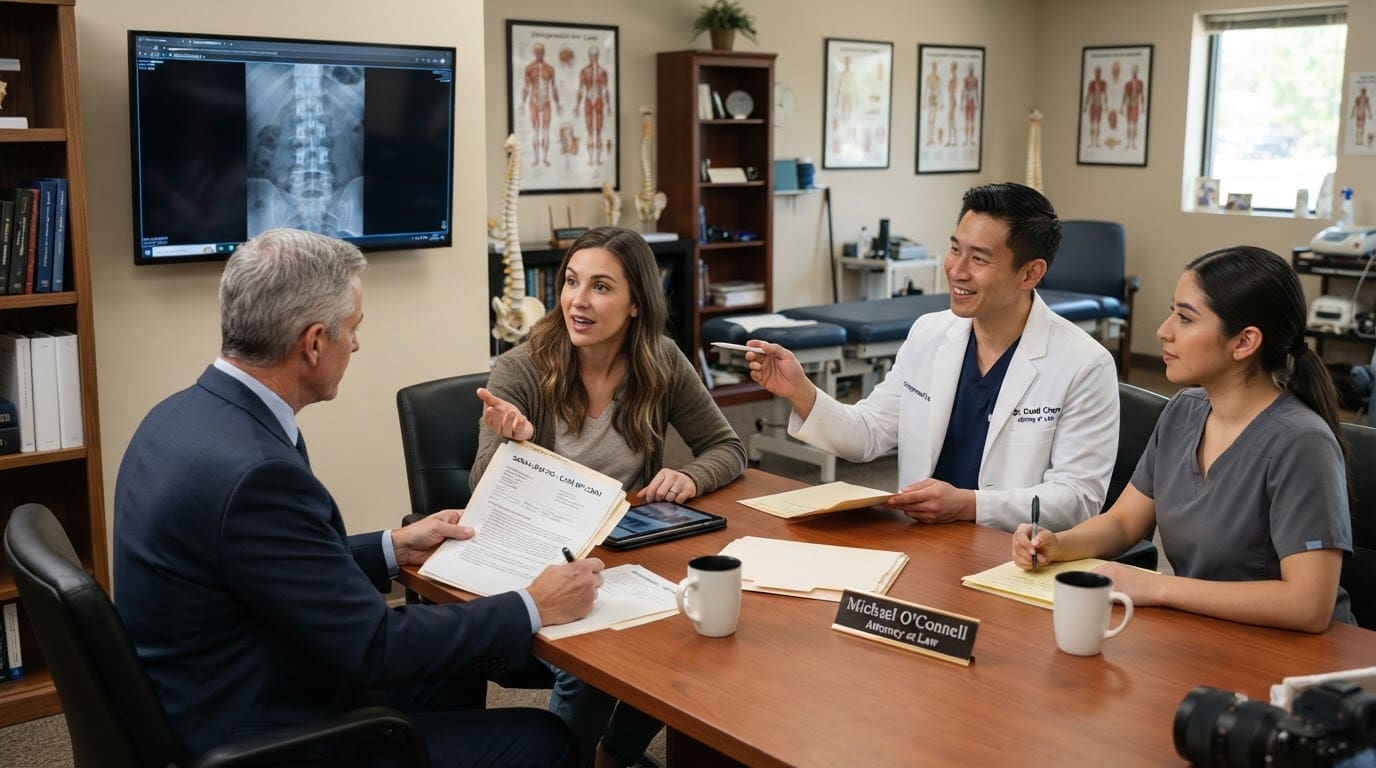
Discover how causation affects personal injury with chiropractic care and rehabilitation strategies for better outcomes.
Table of Contents
Abstract
Causation is the indispensable legal and medical bridge connecting a specific traumatic event—such as a motor vehicle collision, slip-and-fall, workplace incident, or sports injury—to the resulting harm that supports recovery of damages in personal injury claims. Without clear, evidence-based proof that the incident caused or materially contributed to the diagnosed conditions, even significant pain, disability, and functional loss may fall short of full compensation. In my more than three decades of clinical practice at Injury Medical Clinic PA (Mission Plaza Injury Medical Clinic) in El Paso, Texas, I have observed that musculoskeletal injuries from trauma seldom remain isolated. They disrupt joint mechanics, alter muscle recruitment patterns, modify nerve signaling, and often trigger secondary comorbidities including chronic pain, reduced mobility, sleep disruption, compensatory strain in distant body regions, and systemic effects on cardiovascular fitness and mood.
Chiropractic care directly addresses these issues by restoring normal joint motion, reducing abnormal afferent input to the nervous system, decreasing local inflammation, facilitating the body’s innate healing processes, and supporting progressive functional restoration. When integrated with medical oversight from Dr. Maria Guadalupe Cardenas, MD (Board Certified in Internal Medicine; NPI #1164426749; Texas MD License #J2933), who brings more than 40 years of experience as an internist and serves as Medical Director and Collaborative Physician, along with functional medicine principles, targeted rehabilitation, and carefully selected non-surgical options, this multidisciplinary approach delivers both durable clinical recovery and the objective, contemporaneous documentation required to establish medical causation to a reasonable degree of medical probability. This educational post explains why causation matters and how it is justified and required in the courtroom, what chiropractic care is, how the two work hand in hand, how chiropractic care reduces musculoskeletal injuries and their comorbidities, the insights it provides for personal injury matters, and how integrative chiropractic care fits into non-surgical treatment pathways. Drawing on the latest findings from leading researchers and my clinical observations, available through wellnessdoctorrx.com and related professional platforms, the goal is to guide readers through an accessible journey from injury to restored function.
Why Causation Is Important and How It Is Justified and Required in the Courtroom for Injuries
Causation forms the foundational requirement in every personal injury claim. Attorneys must prove that the defendant’s negligent or wrongful conduct caused the plaintiff’s injuries and resulting damages. Courts examine both factual causation and legal (proximate) causation. Factual causation typically applies the “but-for” test: but for the incident, would the injury have occurred? Proximate causation asks whether the harm was a reasonably foreseeable result of the conduct and whether the connection is sufficiently direct to justify liability, often evaluated under a substantial factor standard that requires the event to be more than a remote or trivial contributor without needing to be the sole cause.
In practice, medical causation must be established to a reasonable degree of medical probability or certainty—meaning more likely than not. Lay testimony or general statements that an injury “could have” resulted from trauma are ordinarily insufficient when the mechanism involves complex musculoskeletal structures such as intervertebral discs, facet joints, ligaments, tendons, or nerves. Most jurisdictions require expert medical testimony for non-obvious injuries. Federal courts and many states apply Daubert standards (or analogous Frye standards) under which the judge acts as gatekeeper. The expert must be qualified, the testimony must assist the trier of fact, and the opinion must rest on sufficient facts or data, reliable principles and methods, and a reliable application of those methods to the specific case. Treating physicians frequently qualify because causation opinions are inherent in clinical diagnosis, prognosis, and treatment planning.
The Bradford Hill criteria, originally outlined in 1965 by epidemiologist Sir Austin Bradford Hill, supply a structured framework for evaluating whether an observed association is likely causal. These criteria include strength of association, consistency, specificity, temporality, biological gradient, biological plausibility, coherence, experimental evidence, and analogy. In musculoskeletal personal injury, temporality is particularly decisive: symptoms that begin or distinctly worsen after a documented event, with a mechanism consistent with known tissue tolerances, strongly support causation. Biological plausibility draws on established biomechanics—for example, the capacity of rear-end impact forces to produce cervical soft-tissue strain or lumbar disc injury. Differential etiology requires the expert to identify plausible causes and systematically rule out alternatives, such as unrelated degenerative progression or intervening events.
Medical records serve as primary evidence. Contemporaneous notes that capture the mechanism of injury in the patient’s words, the timing of symptom onset, objective findings (restricted range of motion measured by goniometer, positive orthopedic tests, muscle strength deficits, postural observations), imaging correlations, and serial functional improvements create a clear timeline. Treatment gaps or incomplete histories can weaken the link, while consistent progression through the inflammatory, proliferative, and remodeling phases of tissue healing strengthens it. In Texas and many other jurisdictions, treating providers who have examined the patient, reviewed the history, and observed the response to care carry substantial weight. Defense arguments that symptoms reflect only pre-existing degeneration are addressed by documenting the clear aggravation or new findings post-incident. Expert opinions framed to a reasonable medical probability, supported by peer-reviewed literature and clinical observations, satisfy the legal threshold and help juries understand complex physiologic processes.
What Chiropractic Care Is and How It Restores Neuromusculoskeletal Function
Chiropractic care is a licensed healthcare profession focused on diagnosing, treating, and preventing disorders of the neuromusculoskeletal system, with particular emphasis on the spine and extremities. Doctors of Chiropractic evaluate joint dysfunction, soft-tissue injury, and related functional impairments, then deliver manual therapies—most commonly high-velocity low-amplitude spinal and extremity adjustments or graded mobilizations—together with rehabilitative exercise, soft-tissue techniques, patient education, and supportive modalities. The central clinical goal is to restore normal joint motion, reduce abnormal mechanical stress and nociceptive drive, modulate pain signaling, improve motor control, and support the body’s capacity for recovery while minimizing reliance on surgery or long-term pharmaceuticals when safer conservative options can succeed.
Modern evidence-based chiropractic practice rests on biomechanics and neurophysiology rather than outdated theories that a vertebral subluxation alone causes systemic disease. High-velocity low-amplitude thrusts and mobilizations stimulate mechanoreceptors in joint capsules, ligaments, and muscle spindles. This produces a brief, high-frequency afferent barrage that can reduce the excitability of dorsal horn neurons involved in pain transmission, modulate descending inhibitory pathways from the brainstem and higher centers, and decrease local muscle hypertonicity. Clinical practice guidelines from multiple organizations support spinal manipulative therapy as part of multimodal care for acute, subacute, and chronic low back pain, neck pain, and certain headache presentations. Systematic reviews and randomized trials show reductions in pain intensity and improved function, particularly when chiropractic care is combined with exercise and education.
In the personal injury setting, chiropractic care is frequently the patient’s earliest and most continuous contact after trauma. Early evaluation identifies red flags requiring imaging or medical referral, establishes objective baseline measures, and initiates conservative management while the inflammatory phase remains active. Because many collision-related or fall-related injuries are graded sprains, strains, and disc injuries rather than fractures or complete ruptures, non-surgical restoration of motion and load-sharing is both clinically appropriate and consistent with the principle of beginning with the least invasive effective intervention.
How Chiropractic Care Works Hand in Hand with Causation in Personal Injury Matters
Chiropractic care and causation evidence reinforce each other in practical, documentable ways. The initial examination captures the patient’s description of the mechanism and correlates it with clinical findings. A restrained driver who reports neck pain after a rear-end impact, demonstrates restricted cervical rotation, and exhibits positive orthopedic tests for soft-tissue strain supplies the temporality and biological plausibility elements required for causation analysis. Subsequent visits document the recovery trajectory through decreasing numerical pain scores, increasing measurable range of motion, improved strength, and reduced functional limitations. These serial observations create a clear timeline that is difficult to dismiss as unrelated to the incident.
Chiropractic providers routinely record objective data—goniometric measurements, manual muscle testing, orthopedic special tests, and postural observations—that can be compared over time. When these findings improve in parallel with the expected phases of tissue healing, the records support the conclusion that the trauma produced a treatable injury whose resolution is consistent with the care provided. Documenting the absence of prior similar symptoms or a clear aggravation of pre-existing conditions is essential. In my clinical experience, patients who had stable, low-level back or neck complaints before a collision frequently report a distinct increase in intensity, new radiation of pain, or new functional loss after the event. Recording that distinction counters defense arguments that current symptoms merely represent the natural progression of degenerative changes.
The treating chiropractor’s ongoing relationship with the patient supplies continuity that a one-time independent medical examination cannot match. When the same provider observes both the acute presentation and the response to care, the opinion that the incident caused or materially contributed to the injury rests on direct clinical observation rather than retrospective chart review alone. Courts and juries give substantial weight to this contemporaneous evidence, especially when it is consistent across chiropractic and medical notes within the same multidisciplinary clinic. Attorneys benefit from detailed, chronological records that map mechanism, objective findings, treatment response, and residual functional limitations to the legal elements of causation and damages.
Physiological Underpinnings of Chiropractic Care for Musculoskeletal Injuries
Spinal and extremity joints that lose normal motion after trauma generate continuous abnormal input from mechanoreceptors and nociceptors. This input can facilitate segmental spinal cord neurons, expand pain receptive fields, and maintain protective muscle co-contraction that further restricts motion—a process known as central sensitization or facilitation. High-velocity low-amplitude manipulation produces a brief, high-frequency burst of discharge from muscle spindle primary afferents and other dynamically sensitive receptors. Animal and human studies show that this afferent volley can reduce the excitability of dorsal horn neurons involved in pain transmission and modulate descending inhibitory pathways originating in the brainstem and higher centers.
Beyond neural effects, restoring joint motion improves local circulation and reduces concentrations of inflammatory mediators in peri-articular tissues. When synovial fluid redistributes and capsular tension normalizes, the chemical environment that sustains peripheral sensitization improves. Soft-tissue techniques used with joint mobilization address myofascial trigger points and adhesions that develop from muscle guarding. Together, these changes reduce the mechanical and chemical drivers of pain, allowing patients to resume more normal movement patterns that further promote healing.
For disc-related injuries, controlled distraction or flexion-distraction techniques can reduce intradiscal pressure and may improve nutrient diffusion into the relatively avascular disc. Combined with core stabilization exercise, this strategy aims to restore load-sharing among the spine’s passive (ligaments and discs), active (muscles), and neural control subsystems. Clinical observations in my practice confirm that patients who regain segmental motion early and then progress through graded loading recover function more reliably than those who remain immobilized or who rely solely on passive modalities. These physiologic mechanisms explain why early, carefully applied chiropractic care can interrupt the cascade from acute trauma to chronic dysfunction and provide the objective markers needed to support causation opinions.
How Chiropractic Care Reduces Musculoskeletal Injuries and Their Comorbidities
Musculoskeletal injuries from trauma commonly produce a cascade of secondary problems. Restricted motion leads to muscle atrophy and altered recruitment patterns. Persistent nociceptive input can contribute to central sensitization, sleep fragmentation, and reduced physical activity. Reduced activity then worsens cardiovascular fitness, glycemic control, and mood. Chiropractic care interrupts this cascade at several points by restoring segmental mobility, reducing muscle hypertonicity, decreasing abnormal afferent drive, and enabling earlier return to graded activity.
Randomized trials in active-duty military personnel have shown that adding chiropractic care to usual medical management produces moderate improvements in low-back-pain intensity and disability at six weeks, along with higher patient satisfaction and lower self-reported pain-medication use (Goertz et al., 2018). Observational studies of older Medicare beneficiaries with chronic low back pain and multiple comorbidities found lower overall costs and lower rates of subsequent surgery among those who received chiropractic manipulative treatment. Systematic reviews support spinal manipulative therapy as part of multimodal care for neck pain and cervicogenic headache, with reductions in both pain and associated disability. Clinical practice guidelines increasingly favor non-pharmacological approaches, including spinal manipulation, for low back and neck pain.
In personal injury populations, the comorbidities I most frequently observe are compensatory shoulder or hip strain from altered gait or posture, tension-type or cervicogenic headache secondary to upper cervical dysfunction, and sleep disruption that prolongs recovery. By restoring cervical and lumbar motion, reducing muscle hypertonicity, and enabling earlier return to graded activity, chiropractic care decreases the likelihood that these secondary problems become entrenched. Patients who recover segmental mobility and core endurance report better tolerance for work and daily activities, which in turn supports mental health and reduces the risk of prolonged opioid exposure. These functional gains are measurable and form part of the clinical narrative that links the original trauma to the full spectrum of injury-related harms.
Insights Chiropractic Care Provides for Personal Injury Cases
Chiropractic care supplies unique insights for personal injury matters through detailed mechanism analysis, objective serial measurements, and observation of treatment response. Mechanism analysis correlates the direction and magnitude of forces with clinical findings—for example, matching a rear-end impact to cervical extension-flexion strain patterns or a lateral impact to lumbar facet and sacroiliac stress. Objective measurements create quantifiable baselines and progress markers that attorneys can present as evidence of injury severity and recovery trajectory. Treatment response itself becomes evidence: measurable improvement consistent with expected tissue healing phases supports the conclusion that the trauma produced a treatable, trauma-related condition rather than an unrelated chronic process.
In multidisciplinary settings, the chiropractor’s findings are coordinated with medical evaluations, imaging, and functional assessments. This coordination strengthens the overall causation opinion by demonstrating consistency across providers. Residual functional limitations—reduced lifting capacity, restricted work tolerances, or ongoing activity limitations—are documented with precision, supporting claims for future care and diminished earning capacity. My clinical observations consistently show that patients who receive early integrative care not only recover function more completely but also generate clearer, more defensible records that withstand scrutiny in negotiations and litigation.
Integrative Chiropractic Care Within Non-Surgical Treatment Pathways
Non-surgical management of traumatic musculoskeletal injury works best when mechanical, neurological, and systemic factors are addressed together. Integrative chiropractic care combines joint mobilization or manipulation with rehabilitative exercise, soft-tissue therapy, nutritional support for tissue repair, and, when indicated, regenerative options such as platelet-rich plasma under appropriate medical direction. The reasoning is straightforward: restoring motion reduces abnormal loading and afferent drive, while progressive loading stimulates collagen remodeling and motor-pattern retraining. A functional medicine evaluation can identify co-factors—such as vitamin D insufficiency, sleep disruption, or inflammatory dietary patterns—that slow healing even when local mechanics improve.
Spinal decompression is used when imaging and clinical findings indicate disc-related nerve compression; controlled traction reduces intradiscal pressure and can create a window for nutrient exchange and symptom relief, allowing patients to participate more fully in active rehabilitation. Soft-tissue techniques and instrument-assisted mobilization address adhesions that limit excursion. The plan adjusts throughout based on the healing phase and the patient’s response, with medical oversight ensuring red-flag conditions are identified and any necessary imaging, lab evaluation, or referral occurs promptly. This staged, multimodal approach prioritizes the least invasive effective options, supports natural healing, and generates the longitudinal data needed for both clinical success and legal causation analysis.
The Multidisciplinary Team Model with Dr. Maria Guadalupe Cardenas
At Injury Medical Clinic PA (Mission Plaza Injury Medical Clinic) in El Paso, Texas, a multidisciplinary model coordinates care by integrating chiropractic care with medical oversight. Dr. Maria Guadalupe Cardenas, MD (Board Certified in Internal Medicine; NPI #1164426749; Texas MD License #J2933), with over 40 years of experience as an internist, serves as Medical Director and Collaborative Physician. She provides medical evaluation, risk stratification, medication reconciliation, imaging pathway coordination, laboratory interpretation, and oversight of specialist referrals. This structure is common in advanced integrative and injury care clinics, ensuring that complex comorbidities, anticoagulation issues, systemic inflammatory conditions, and diagnostic uncertainties receive appropriate physician-level attention. At the same time, chiropractic and rehabilitative services address the neuromusculoskeletal components.
How the team integrates:
- Chiropractic care (Dr. Jimenez) focuses on biomechanical assessment, spinal and extremity adjustments, proprioceptive retraining, motor control restoration, and movement economy optimization.
- Internal medicine oversight (Dr. Cardenas) ensures diagnostic clarity, safety, pharmacologic coherence, and coordination of medical workups.
- Functional medicine addresses systems biology factors such as inflammation, micronutrient status, sleep, and metabolic contributors that influence recovery.
- Personal injury care includes meticulous documentation of mechanism, objective findings, rehabilitation staging, return-to-function metrics, and communication with legal and insurance parties.
- Rehabilitation progresses patients through graded loading, sensorimotor training, endurance building, and functional integration.
This collaborative framework creates coherent clinical pathways, reduces care fragmentation, supports safer decision-making, and generates consistent, multi-provider records that strengthen causation analysis. Patients receive thorough evaluations that examine movement, posture, imaging when indicated, inflammation, and nutritional status, with plans that may include chiropractic adjustments, decompression, soft-tissue therapies, progressive exercise, and supportive functional medicine interventions—all coordinated within a single system focused on root-cause recovery and restored mobility.
Clinical Observations and the Path Forward
Over decades of practice, I have observed that patients who receive early, integrated care after trauma typically demonstrate clearer symptom-to-mechanism correlations, more predictable recovery trajectories, and fewer entrenched comorbidities than those whose care is delayed or fragmented. Serial objective measurements—range of motion, strength, functional capacity, and pain scores—provide both clinical guidance and evidentiary support. When an experienced internist, a CCardenas-like Dr., combines medical oversight with chiropractic and rehabilitative expertise, they can promptly identify red flags, address systemic contributors, and optimize non-surgical pathways. The result is improved patient outcomes and more robust documentation for the legal process, which requires proving causation to a reasonable degree of medical probability.
Readers seeking further clinical observations may review materials at wellnessdoctorrx.com and the professional profile at linkedin.com/in/dralexjimenez. The journey from traumatic event to functional restoration is most successful when causation is carefully established, mechanical and neurologic dysfunction is addressed through evidence-based chiropractic care, and the full multidisciplinary team works in coordinated fashion under appropriate medical direction.
References
American Medical Association. (n.d.). Guides to the evaluation of permanent impairment (6th ed.). https://www.ama-assn.org
Goertz, C. M., Long, C. R., Vining, R. D., Pohlman, K. A., Walter, J., Colterer, I. (2018). Effect of usual medical care plus chiropractic care vs usual medical care alone on pain and disability among US service members with low back pain: A comparative effectiveness clinical trial. JAMA Network Open, 1(1), e180105. https://jamanetwork.com/journals/jamanetworkopen/fullarticle/2680417
Hill, A. B. (1965). The environment and disease: Association or causation? Proceedings of the Royal Society of Medicine, 58(5), 295–300.
Pickar, J. G. (2002). Neurophysiological effects of spinal manipulation. The Spine Journal, 2(5), 357–371. https://doi.org/10.1016/S1529-9430(02)00400-X
The discussion above incorporates additional supporting literature on clinical practice guidelines, systematic reviews of spinal manipulative therapy, and personal injury causation standards.
SEO tags: causation in personal injury, chiropractic care for musculoskeletal injuries, medical causation courtroom, integrative chiropractic treatment, non-surgical injury recovery, Dr. Alexander Jimenez El Paso, Dr. Maria Guadalupe Cardenas, personal injury documentation, spinal manipulative therapy evidence, comorbidities musculoskeletal trauma, functional medicine injury care, Bradford Hill criteria injury, reasonable medical probability, multidisciplinary injury clinic El Paso, chiropractic neurophysiology pain reduction, trauma recovery rehabilitation, evidence-based chiropractic, Injury Medical Clinic PA
Post Disclaimer
General Disclaimer, Licenses and Board Certifications *
Professional Scope of Practice *
The information herein on "Chiropractic Care Solutions With Causation for Personal Injury" is not intended to replace a one-on-one relationship with a qualified health care professional or licensed physician and is not medical advice. We encourage you to make healthcare decisions based on your research and partnership with a qualified healthcare professional.
Blog Information & Scope Discussions
Welcome to El Paso's Premier Wellness and Injury Care Clinic & Wellness Blog, where Dr. Alex Jimenez, DC, FNP-C, a Multi-State board-certified Family Practice Nurse Practitioner (FNP-BC) and Chiropractor (DC), presents insights on how our multidisciplinary team is dedicated to holistic healing and personalized care. Our practice aligns with evidence-based treatment protocols inspired by integrative medicine principles, similar to those on this site and on our family practice-based chiromed.com site, focusing on naturally restoring health for patients of all ages.
Our areas of multidisciplinary practice include Wellness & Nutrition, Chronic Pain, Personal Injury, Auto Accident Care, Work Injuries, Back Injury, Low Back Pain, Neck Pain, Migraine Headaches, Sports Injuries, Severe Sciatica, Scoliosis, Complex Herniated Discs, Fibromyalgia, Chronic Pain, Complex Injuries, Stress Management, Functional Medicine Treatments, and in-scope care protocols.
Our information scope is multidisciplinary, focusing on musculoskeletal and physical medicine; wellness; contributing etiological viscerosomatic disturbances within clinical presentations; associated somato-visceral reflex clinical dynamics; subluxation complexes; sensitive health issues; and functional medicine articles, topics, and discussions.
We provide and present clinical collaboration with specialists from various disciplines. Each specialist follows their professional scope of practice and licensure jurisdiction. We use functional health & wellness protocols to treat and support care for musculoskeletal injuries or disorders.
Our videos, posts, topics, and insights address clinical matters and issues that directly or indirectly relate to our clinical scope of practice.
Our office has made a reasonable effort to provide supportive citations and has identified relevant research studies that support our posts. We provide copies of supporting research studies upon request to regulatory boards and the public.
For further discussion on how this information relates to specific care plans or treatment protocols, please ask Dr. Alex Jimenez, DC, APRN, FNP-BC, or contact us at 915-850-0900.
We are here to help you and your family.
Blessings
Dr. Alex Jimenez DC, MSACP, APRN, FNP-BC*, CCST, IFMCP, CFMP, ATN
Email: [email protected]
Multidisciplinary Licensing & Board Certifications:
Licensed as a Doctor of Chiropractic (DC) in Texas & New Mexico*
Chiropractic Licenses:
Texas DC License #: TX5807, Verified: TX5807
New Mexico DC License #: NM-DC2182, Verified: NM-DC2182
Nurse Practitioner Licenses:
Texas APRN License #: 1191402, Verified: 1191402 *
New Mexico CNP License #: 90560, Verified 90560
Florida APRN License #: 11043890, Verified: APRN11043890 *
Colorado License #: C-APN.0105610-C-NP, Verified: C-APN.0105610-C-NP
New York License #: N25929, Verified N25929
Georgia APRN License #: GAA-NP005701
Multi-State Advanced Practice Registered Nurse (APRN*) Texas & Multi-States
Multi-state Compact APRN License by Endorsement (43 States)
Compact Status: Multi-State License: Authorized to Practice in 43 States*
Nursing Licensure Compact: Updated Here
DEA Registration: (Drug Enforcement Agency Registered)
All medical (MDs) and family practice providers (FNP-APRN) are registered and licensed to offer various levels of medication.
Verify Providers Here
License Verification Link: Nursys License Verifier
* Prescriptive Authority Authorized (DEA Registered Providers). Call if Required
Board Certification:
ANCC FNP-BC: Board Certified Nurse Practitioner*
Education:
Graduate with Honors: ICHS: MSN-FNP (Family Nurse Practitioner Program)
Degree Granted. Master's in Family Practice, MSN Diploma (Cum Laude)
Dr. Alex Jimenez, DC, APRN, FNP-BC*, CFMP, IFMCP, ATN, CCST
(Board Certified: Family Practice Nurse Practitioner—Multistate)*
(Licensed Nurse Practitioner & Chiropractor - Multistate)*
Clinical Director
DC & FNP License (Review Above)
Digital Business Card
NPI: 1205907805
Dr. Maria Cardenas, MD
(Board Certified: Internal Medicine)
(Licensed Medical Doctor)
Medical Director, Clinical Director & Collaborative Physician
NPI # 1164426748
MD License #: J2933
Licenses and Board Certifications:
MD: Medical Doctor
DC: Doctor of Chiropractic
APRNP: Advanced Practice Registered Nurse
FNP-BC: Family Practice Specialization (Multi-State Board Certified)
FNP-BC: Family Practice Across Life Span (Neonatal to Geriatrics)
RN: Registered Nurse (Multi-State Compact License)
CFMP: Certified Functional Medicine Provider
MSN-FNP: Master of Science in Family Practice Medicine
MSACP: Master of Science in Advanced Clinical Practice
IFMCP: Institute of Functional Medicine
CCST: Certified Chiropractic Spinal Trauma
ATN: Advanced Translational Neutrogenomics
Family with Primary Care Focus (Family Nurse Practitioner or FNP)
- The Family Nurse Practitioner (FNP) promotes, maintains, and restores health for individuals and families across the lifespan. FNPs also identify health risks, promote wellness, and diagnose and manage acute and chronic illness.
- The FNP focuses on comprehensive primary care, promoting healthy lifestyles for patients across the lifespan in settings such as private practice, physician offices, and community health centers.
Memberships & Associations:
TCA: Texas Chiropractic Association: Member ID: 104311
TNA: Texas Nurse Association: Member ID: 06458222
TNP: Texas Nurse Practitioner Association ID: 2025091511
AANP: American Association of Nurse Practitioners: Member ID: 2198960
ANA: American Nurses Association: Member ID: 06458222 (District TX01)
| Primary Taxonomy | Selected Taxonomy | State | License Number |
|---|---|---|---|
| No | 111N00000X - Chiropractor | NM | DC2182 |
| Yes | 111N00000X - Chiropractor | TX | DC5807 |
| Yes | 363LF0000X - Nurse Practitioner - Family | TX | 1191402 |
| Yes | 363LF0000X - Nurse Practitioner - Family | FL | 11043890 |
| Yes | 363LF0000X - Nurse Practitioner - Family | CO | C-APN.0105610-C-NP |
| Yes | 363LF0000X - Nurse Practitioner - Family | NY | N25929 |
| Yes | 363LF0000X - Nurse Practitioner - Family | NM |
90560 |
| Yes | 363LF0000X - Nurse Practitioner - Family | GA | GAA-NP005701 |
Dr. Alex Jimenez, DC, APRN, FNP-BC*, CFMP, IFMCP, ATN, CCST
(Board Certified: Family Practice Nurse Practitioner—Multistate)*
(Primary Care Across Lifespan—Neonatal / Pediatric / Adult / Geriatrics)
(Licensed Nurse Practitioner & Chiropractor - Multistate)*
Clinical Director
Digital Business Card
NPI: 1205907805
Dr. Maria Cardenas, MD
(Board Certified: Internal Medicine)*
(Licensed Medical Doctor)*
Medical Director, Clinical Director & Collaborative Physician
NPI # 1164426748
MD License #: J2933
📆 Schedule Appointment: Schedule 24/7 (Click Here)

Comments are closed.