

Medical Laboratory Testing After an Injury

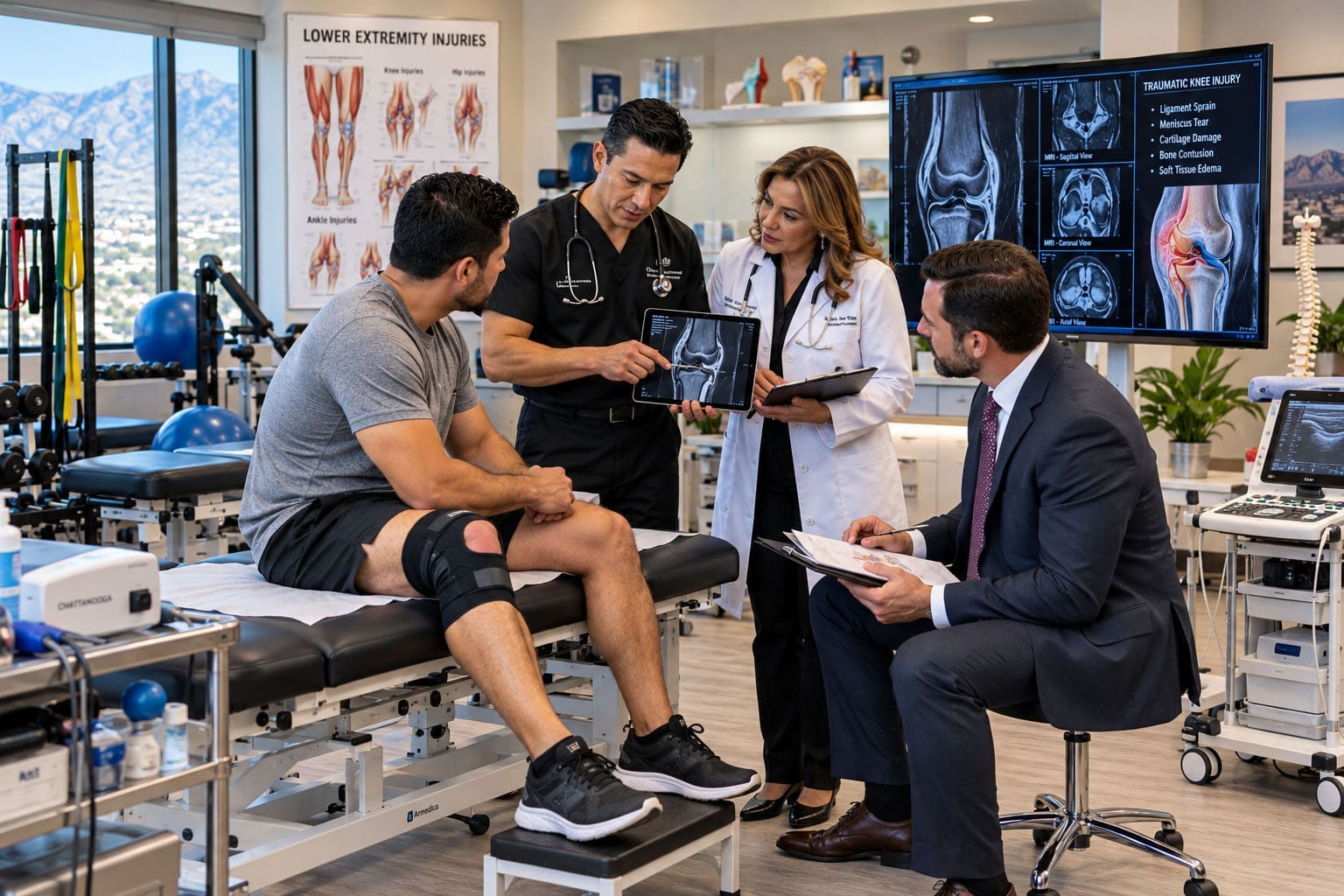
Table of Contents
Can Medical Laboratory Testing Clarify Complex Injury Recovery?
After a car crash, slip-and-fall, or workplace accident, recovery may not follow a simple path. Pain can linger, muscles may fatigue, sleep may worsen, and a patient may develop weakness, numbness, low energy, or slower-than-expected healing. The question then becomes not only, “Where were you injured?” But also, “Is something inside the body making recovery harder?”
That is where medical laboratory testing can sometimes help.
Blood and other laboratory tests can provide clinicians useful information about inflammation, blood cell health, glucose control, kidney or liver function, nutritional status, and other medical conditions that may affect recovery. However, clinicians must use laboratory results appropriately. A blood test can help identify a complication or contributing health factor. But it usually cannot prove by itself that a car crash, fall, or other traumatic event caused a musculoskeletal injury.
For patients with complex injuries, the greatest value comes from combining laboratory findings with history, examination, injury mechanism, imaging, neurological findings, functional testing, and symptom timing.

Laboratory Testing Answers a Different Question
Imaging and physical examination often focus on structure and function. X-rays may help evaluate alignment or fractures. MRI may show discs, ligaments, nerves, or other soft tissues. A neurological examination may identify weakness, sensory changes, or reflex abnormalities. Functional testing may document loss of motion, strength, balance, endurance, or movement quality.
Laboratory testing examines another part of the recovery picture: physiology.
For example, post-injury fatigue may reflect pain-related sleep disruption, but anemia, blood sugar problems, thyroid disease, medication effects, infection, or nutritional deficiency can also contribute. Persistent inflammatory markers may reflect tissue injury. Alternatively, chronic disease, obesity, smoking, infection, autoimmune disease, or metabolic dysfunction can also influence them.
This is why laboratory testing is most useful when the clinician has a medically reasonable question to answer rather than ordering broad panels without a clear purpose.
When Laboratory Studies May Be Medically Justified
Laboratory testing may be appropriate when a patient’s symptoms, medical history, physical findings, medications, or delayed recovery suggest that a systemic problem could be complicating the injury.
Common examples include:
- A complete blood count when unexplained fatigue, bruising, infection concerns, anemia, or abnormal bleeding may be relevant.
- A comprehensive metabolic panel when kidney function, liver function, electrolytes, or other metabolic issues may affect treatment planning.
- Glucose or hemoglobin A1c testing when diabetes or poor blood sugar control may be contributing to fatigue, inflammation, neuropathic symptoms, or slower healing.
- C-reactive protein or erythrocyte sedimentation rate when the clinical picture raises a reasonable concern about inflammation. These markers can support an inflammatory assessment, but they are nonspecific and must be interpreted in context (Singh et al., 2025; Tishkowski & Zubair, 2025).
- Test iron, ferritin, vitamin B12, folate, or other nutrients when symptoms and risk factors suggest a possible deficiency. For example, vitamin B12 evaluation can be medically relevant when neurological or hematological symptoms are present (National Institute for Health and Care Excellence [NICE], 2024).
- Creatine kinase or other targeted testing when significant muscle injury is suspected.
- Additional endocrine, immune, or nutritional studies when the patient’s medical history and examination justify a focused workup.
The key is targeted testing. More tests don’t automatically improve care; results matter most when they answer a clinical question.
Inflammation Markers Can Support the Picture, but They Do Not Name the Cause
Patients sometimes hear that a high inflammatory marker “proves” an injury is still active. That conclusion is too simple.
C-reactive protein, or CRP, can rise after significant trauma, but it can also rise because of infection, autoimmune disease, metabolic conditions, smoking, obesity, and many other inflammatory states. Singh, Goyal, and Patel (2025) emphasize that CRP is a nonspecific marker that must be interpreted within the broader clinical context.
The same caution applies to erythrocyte sedimentation rate, or ESR. ESR can support inflammation, but it does not identify a specific disease or cause. Age, anemia, pregnancy, chronic disease, and other factors can influence the result (Tishkowski & Zubair, 2025).
Therefore, an elevated CRP or ESR after a collision may be clinically important, but it does not independently prove that the collision caused a cervical sprain, lumbar disc injury, radiculopathy, or other specific traumatic diagnosis.
Nutritional Testing Requires Careful Interpretation
Nutrition matters during recovery because tissue repair, nerve function, immune regulation, and rehabilitation depend on adequate energy, protein, vitamins, minerals, and hydration.
Still, laboratory nutrition testing has limits.
For example, albumin and prealbumin were once commonly treated as direct markers of nutritional status. Modern guidance warns that inflammation strongly influences these proteins, so they should not be used alone as stand-ins for total body protein or muscle mass (Evans et al., 2021).
For complex injury care, don’t pull laboratory values out of context. Dietary history, weight changes, gastrointestinal symptoms, medications, examination findings, and inflammatory status all matter.
When nutritional testing is medically justified, it can help clinicians identify correctable factors that may support better energy, neurological function, sleep, exercise tolerance, and rehabilitation participation.
Why Laboratory Results Usually Cannot Prove Trauma Causation
Medical-legal causation asks a different question from laboratory medicine.
A laboratory test asks, “What is happening in the body now?” Causation asks, “Did this specific event cause or materially contribute to this specific condition?”
Those questions overlap, but they are not the same.
Suppose a patient has elevated CRP two weeks after a rear-end collision. The result may show that inflammation is present. It cannot, by itself, establish the source of the inflammation. The patient might have soft-tissue trauma. However, the same marker can be influenced by infection, metabolic syndrome, inflammatory arthritis, obesity, smoking, or other conditions.
To evaluate trauma causation, clinicians typically need a broader chain of evidence: a credible mechanism of injury, a consistent timeline, symptoms that appeared or worsened after the event, objective examination findings, appropriate imaging or functional testing, consideration of pre-existing conditions, and a medically reasonable explanation linking the mechanism to the diagnosed injury.
In other words, the lab can strengthen clinical understanding, but it rarely answers the causation question on its own.
The Value of Internal Medicine in Complex Recovery
Some injury patients are medically straightforward. Others are not.
A person recovering from a collision may also have diabetes, hypertension, thyroid disease, anemia, obesity, kidney disease, autoimmune illness, medication interactions, poor sleep, nutritional deficiencies, or age-related health risks. These conditions may influence how quickly the person improves, what treatments are safe, and whether additional medical evaluation is needed.
Internal medicine becomes especially valuable when the recovery pattern does not match expectations. Instead of assuming that every symptom comes from the accident, a medically integrated team can ask whether trauma, pre-existing disease, metabolic factors, and lifestyle conditions are interacting.
That approach supports beneficence by targeting factors that truly affect recovery, non-maleficence by reducing unnecessary or poorly targeted treatment, and autonomy by helping patients understand what tests can and cannot show.
A Multidisciplinary Model in El Paso
- Dr. Alex Jimenez’s Injury Medical Chiropractic and Functional Medicine Clinic uses a medically integrated model for patients with musculoskeletal injuries and complex recovery needs.
- Dr. Maria Guadalupe Cardenas, MD, a board-certified internal medicine physician with more than 40 years of experience, serves as medical director and collaborative physician. Dr. Jimenez, DC, APRN, FNP-BC, combines chiropractic training with nurse-practitioner-level medical evaluation and a clinical focus that includes soft-tissue injury, functional medicine, rehabilitation, and advanced diagnostics.
This structure allows clinicians to consider a patient’s mechanical injury and internal medical status together, rather than in separate silos. Chiropractic and rehabilitation can address mobility, biomechanics, and function. Meanwhile, medical oversight and appropriately selected laboratory studies can evaluate metabolic, inflammatory, endocrine, or nutritional concerns that may complicate recovery. The clinic describes this combination of medical direction, nurse-practitioner care, chiropractic injury management, functional medicine, and advanced treatment options as a unique model in El Paso. It represents it as the only local clinic offering this particular combination of treatments under one integrated system.
Beyond Medicine: The Power of Chiropractic Care | El Paso, TX
Laboratory Data Should Clarify Care, Not Replace Clinical Judgment
The best laboratory test answers a relevant medical question.
For an injury patient, laboratory testing may reveal anemia, poor glucose control, inflammatory activity, nutrient deficiency, metabolic stress, or another condition that changes the recovery plan. Correcting a contributing problem may improve energy, sleep, exercise tolerance, neurological function, and participation in rehabilitation.
But laboratory results should remain one part of a larger clinical story.
- They do not replace the history.
- They do not replace the physical examination.
- They do not replace imaging when it is indicated.
- They do not replace biomechanical analysis, neurological testing, or careful review of the accident mechanism.
And in a personal injury case, they generally do not independently prove that trauma caused the diagnosed condition.
Used correctly, medical laboratory testing can clarify why recovery is unusually difficult, identify treatable barriers, improve medical safety, and help the care team create a more individualized plan. Laboratory medicine contributes most not by forcing one number to explain the entire injury. Instead, it helps clinicians understand the whole patient.
References
Evans, D. C., Corkins, M. R., Malone, A., Miller, S., Mogensen, K. M., Guenter, P., Jensen, G. L., & ASPEN Malnutrition Committee. (2021). The use of visceral proteins as nutrition markers: An ASPEN position paper. Nutrition in Clinical Practice, 36(1), 22–28. https://doi.org/10.1002/ncp.10588
National Institute for Health and Care Excellence. (2024). Vitamin B12 deficiency in over 16s: Diagnosis and management (NICE Guideline NG239). https://www.nice.org.uk/guidance/ng239
Singh, B., Goyal, A., & Patel, B. C. (2025). C-reactive protein: Clinical relevance and interpretation. In StatPearls. StatPearls Publishing.
Tishkowski, K., & Zubair, M. (2025). Erythrocyte sedimentation rate. In StatPearls. StatPearls Publishing.
Post Disclaimer
General Disclaimer, Licenses and Board Certifications *
Professional Scope of Practice *
The information herein on "Medical Laboratory Testing After an Injury" is not intended to replace a one-on-one relationship with a qualified health care professional or licensed physician and is not medical advice. We encourage you to make healthcare decisions based on your research and partnership with a qualified healthcare professional.
Blog Information & Scope Discussions
Welcome to El Paso's Premier Wellness and Injury Care Clinic & Wellness Blog, where Dr. Alex Jimenez, DC, FNP-C, a Multi-State board-certified Family Practice Nurse Practitioner (FNP-BC) and Chiropractor (DC), presents insights on how our multidisciplinary team is dedicated to holistic healing and personalized care. Our practice aligns with evidence-based treatment protocols inspired by integrative medicine principles, similar to those on this site and on our family practice-based chiromed.com site, focusing on naturally restoring health for patients of all ages.
Our areas of multidisciplinary practice include Wellness & Nutrition, Chronic Pain, Personal Injury, Auto Accident Care, Work Injuries, Back Injury, Low Back Pain, Neck Pain, Migraine Headaches, Sports Injuries, Severe Sciatica, Scoliosis, Complex Herniated Discs, Fibromyalgia, Chronic Pain, Complex Injuries, Stress Management, Functional Medicine Treatments, and in-scope care protocols.
Our information scope is multidisciplinary, focusing on musculoskeletal and physical medicine; wellness; contributing etiological viscerosomatic disturbances within clinical presentations; associated somato-visceral reflex clinical dynamics; subluxation complexes; sensitive health issues; and functional medicine articles, topics, and discussions.
We provide and present clinical collaboration with specialists from various disciplines. Each specialist follows their professional scope of practice and licensure jurisdiction. We use functional health & wellness protocols to treat and support care for musculoskeletal injuries or disorders.
Our videos, posts, topics, and insights address clinical matters and issues that directly or indirectly relate to our clinical scope of practice.
Our office has made a reasonable effort to provide supportive citations and has identified relevant research studies that support our posts. We provide copies of supporting research studies upon request to regulatory boards and the public.
For further discussion on how this information relates to specific care plans or treatment protocols, please ask Dr. Alex Jimenez, DC, APRN, FNP-BC, or contact us at 915-850-0900.
We are here to help you and your family.
Blessings
Dr. Alex Jimenez DC, MSACP, APRN, FNP-BC*, CCST, IFMCP, CFMP, ATN
Email: [email protected]
Multidisciplinary Licensing & Board Certifications:
Licensed as a Doctor of Chiropractic (DC) in Texas & New Mexico*
Chiropractic Licenses:
Texas DC License #: TX5807, Verified: TX5807
New Mexico DC License #: NM-DC2182, Verified: NM-DC2182
Nurse Practitioner Licenses:
Texas APRN License #: 1191402, Verified: 1191402 *
New Mexico CNP License #: 90560, Verified 90560
Florida APRN License #: 11043890, Verified: APRN11043890 *
Colorado License #: C-APN.0105610-C-NP, Verified: C-APN.0105610-C-NP
New York License #: N25929, Verified N25929
Georgia APRN License #: GAA-NP005701
Multi-State Advanced Practice Registered Nurse (APRN*) Texas & Multi-States
Multi-state Compact APRN License by Endorsement (43 States)
Compact Status: Multi-State License: Authorized to Practice in 43 States*
Nursing Licensure Compact: Updated Here
DEA Registration: (Drug Enforcement Agency Registered)
All medical (MDs) and family practice providers (FNP-APRN) are registered and licensed to offer various levels of medication.
Verify Providers Here
License Verification Link: Nursys License Verifier
* Prescriptive Authority Authorized (DEA Registered Providers). Call if Required
Board Certification:
ANCC FNP-BC: Board Certified Nurse Practitioner*
Education:
Graduate with Honors: ICHS: MSN-FNP (Family Nurse Practitioner Program)
Degree Granted. Master's in Family Practice, MSN Diploma (Cum Laude)
Dr. Alex Jimenez, DC, APRN, FNP-BC*, CFMP, IFMCP, ATN, CCST
(Board Certified: Family Practice Nurse Practitioner—Multistate)*
(Licensed Nurse Practitioner & Chiropractor - Multistate)*
Clinical Director
DC & FNP License (Review Above)
Digital Business Card
NPI: 1205907805
Dr. Maria Cardenas, MD
(Board Certified: Internal Medicine)
(Licensed Medical Doctor)
Medical Director, Clinical Director & Collaborative Physician
NPI # 1164426748
MD License #: J2933
Licenses and Board Certifications:
MD: Medical Doctor
DC: Doctor of Chiropractic
APRNP: Advanced Practice Registered Nurse
FNP-BC: Family Practice Specialization (Multi-State Board Certified)
FNP-BC: Family Practice Across Life Span (Neonatal to Geriatrics)
RN: Registered Nurse (Multi-State Compact License)
CFMP: Certified Functional Medicine Provider
MSN-FNP: Master of Science in Family Practice Medicine
MSACP: Master of Science in Advanced Clinical Practice
IFMCP: Institute of Functional Medicine
CCST: Certified Chiropractic Spinal Trauma
ATN: Advanced Translational Neutrogenomics
Family with Primary Care Focus (Family Nurse Practitioner or FNP)
- The Family Nurse Practitioner (FNP) promotes, maintains, and restores health for individuals and families across the lifespan. FNPs also identify health risks, promote wellness, and diagnose and manage acute and chronic illness.
- The FNP focuses on comprehensive primary care, promoting healthy lifestyles for patients across the lifespan in settings such as private practice, physician offices, and community health centers.
Memberships & Associations:
TCA: Texas Chiropractic Association: Member ID: 104311
TNA: Texas Nurse Association: Member ID: 06458222
TNP: Texas Nurse Practitioner Association ID: 2025091511
AANP: American Association of Nurse Practitioners: Member ID: 2198960
ANA: American Nurses Association: Member ID: 06458222 (District TX01)
| Primary Taxonomy | Selected Taxonomy | State | License Number |
|---|---|---|---|
| No | 111N00000X - Chiropractor | NM | DC2182 |
| Yes | 111N00000X - Chiropractor | TX | DC5807 |
| Yes | 363LF0000X - Nurse Practitioner - Family | TX | 1191402 |
| Yes | 363LF0000X - Nurse Practitioner - Family | FL | 11043890 |
| Yes | 363LF0000X - Nurse Practitioner - Family | CO | C-APN.0105610-C-NP |
| Yes | 363LF0000X - Nurse Practitioner - Family | NY | N25929 |
| Yes | 363LF0000X - Nurse Practitioner - Family | NM |
90560 |
| Yes | 363LF0000X - Nurse Practitioner - Family | GA | GAA-NP005701 |
Dr. Alex Jimenez, DC, APRN, FNP-BC*, CFMP, IFMCP, ATN, CCST
(Board Certified: Family Practice Nurse Practitioner—Multistate)*
(Primary Care Across Lifespan—Neonatal / Pediatric / Adult / Geriatrics)
(Licensed Nurse Practitioner & Chiropractor - Multistate)*
Clinical Director
Digital Business Card
NPI: 1205907805
Dr. Maria Cardenas, MD
(Board Certified: Internal Medicine)*
(Licensed Medical Doctor)*
Medical Director, Clinical Director & Collaborative Physician
NPI # 1164426748
MD License #: J2933
📆 Schedule Appointment: Schedule 24/7 (Click Here)

Comments are closed.